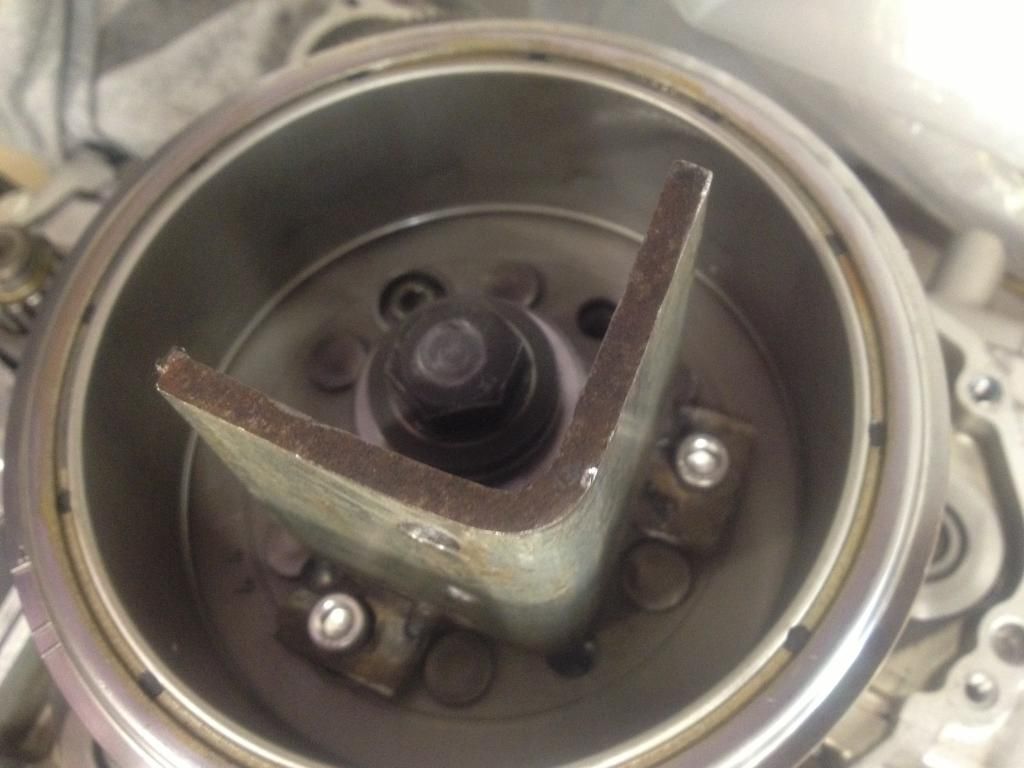
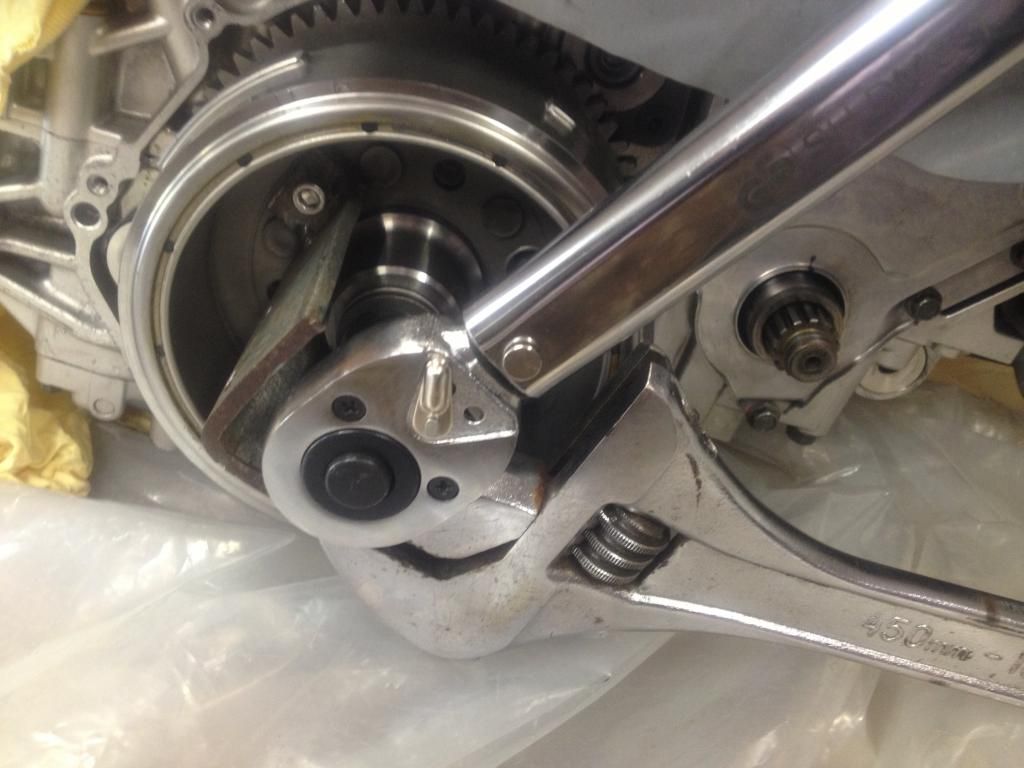
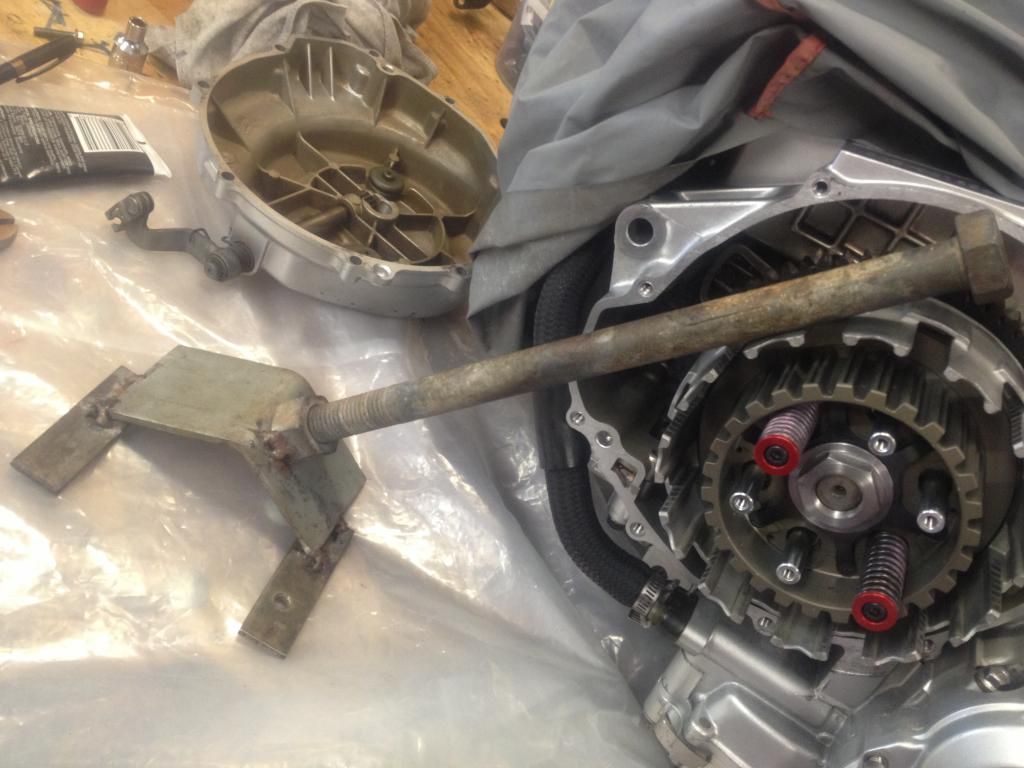
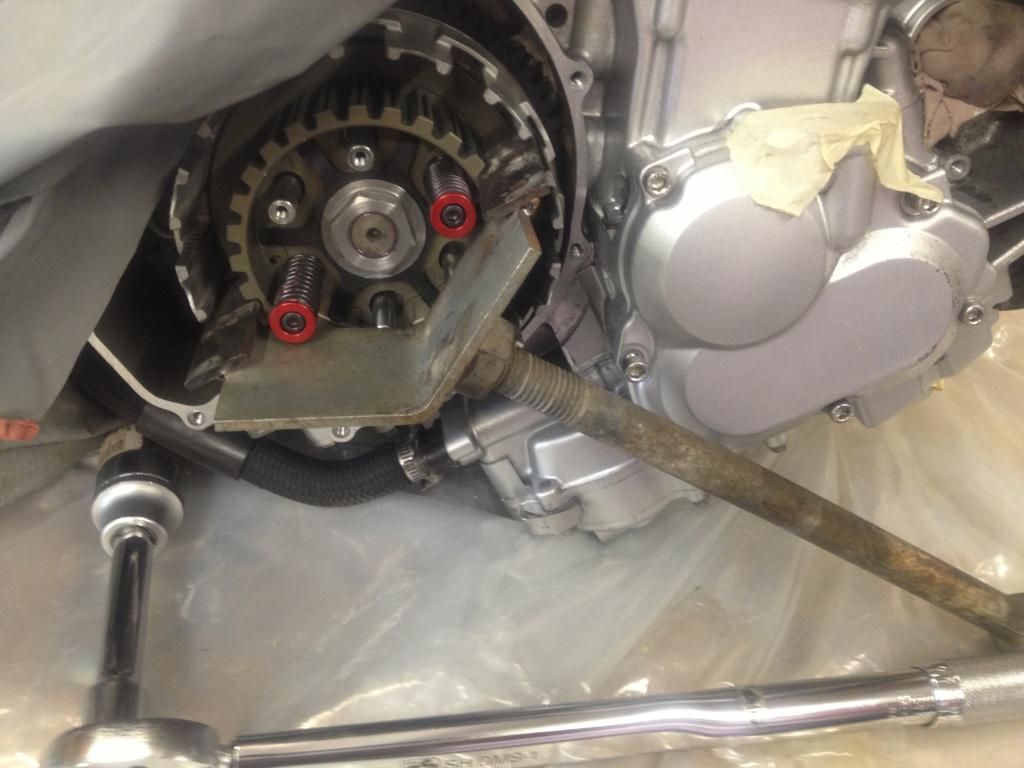
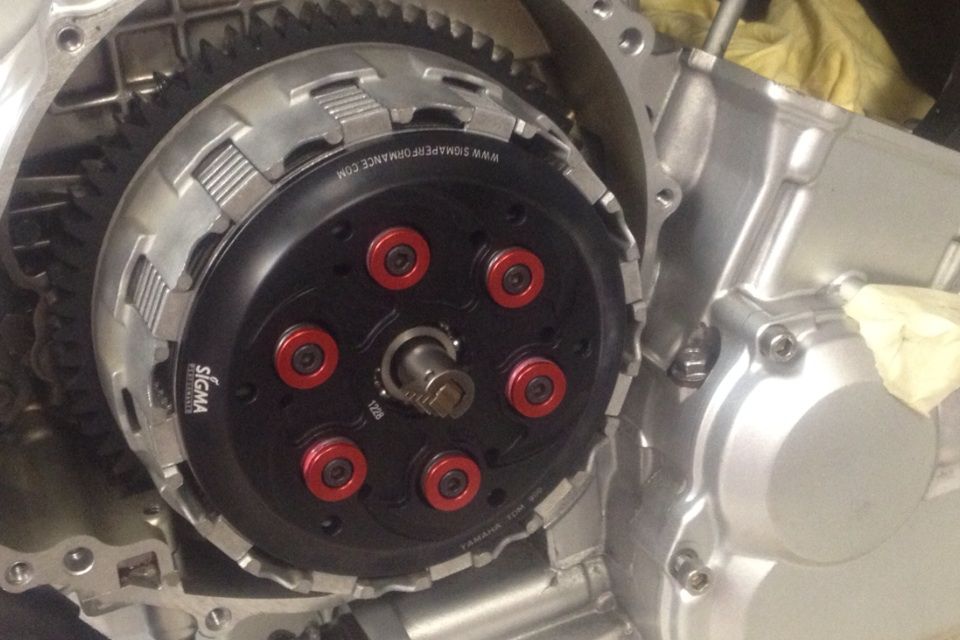
More notes on the SIGMA SLIPPER CLUTCH as reference.
Sigma Slipper Clutch, clearance checking and adjustment.
Clearance.
This procedure is recommended to ensure your clutch is set up correctly. If you use a new standard clutch pack on a clutch assembled correctly on to the bike then you should be able to use the clutch immediately with no additional work necessary to set it up for correct operation.
If you hold the pressure plate up to the light you will see that there are several holes through it that are not required either for the springs or the clutch centre. They are the furthest out from the centre. These holes are clearance checking holes. If you turn the pressure plate over and look at the pressure plate from the ‘back’ you will see they all come out in the groove that takes the clutch centre when the clutch is assembled. We use these holes, together with a depth gauge, to measure how far the centre has to rise when the slipper mechanism is activated.
All clutch metal plates have small notches cut in them. These deliberately destabilize the balance of the clutch plates and help the clutch pack ‘break’ when the lever is pulled in. On assembly make sure the notches are distributed randomly.
This procedure is normally done with the clutch on the bike but if you wish can be done off the bike (our pictures are of a clutch off the bike only for clarity).
1) Before you fit any plates to the clutch, place the pressure plate on to the top of the clutch centre.
2) If you look through the clearance check holes you will see the top edge of the clutch centre.
3) Simply measure the depth of the hole through the pressure plate to the clutch centre. The measurement differs depending on the design of the clutch. Pic a) and Pic b)
4) Assemble the clutch with all the correct plates (check your clutch instructions!) springs and spring collars.
5) Now, simply recheck the depth of the holes. The plate pack should have lifted the pressure plate slightly and the depth of the holes should be slightly greater than before. Pic c)
6) Subtract the first measurement (Para 3 above) from the second (Para 5 above) and you will get the clearance between the centre and the pressure plate A new unworn clutch pack should give a measurement of 1 to 1.2mm (1.5 for big twins) more than before..
7) For general track and other non-competition use the clearance should be between 1.0 and 1.2mm (1.5 for big twins). Check that the clutch and the clutch pack is assembled correctly if the clearance is over 2.0mm with a standard clutch pack. If the clearance is much below 1.0mm your clutch pack is worn and you should consider new friction plates.

Different clearances can give different effects. 1.0 to 1.2mm (1.5 for big twins) is ‘normal’. This measurement means the clutch will require little maintenance and will work well in most circumstances.
9) We include pictures of several different clutches to show the clearance check hole positions together with a clutch dismantled pic to save you from having to take it apart to see inside!
Changing the amount of engine braking felt through the clutch.
A second adjustment is to change the strength of the main clutch springs or their preload. The stronger the spring rate or the higher the preload the harder the clutch centre has to work to hold the clutch partially disengaged. The effect is to transmit more engine braking through, BUT it gives the plates a much harder time and they will wear out more quickly.
You do not have to change all the springs; you can say have 2 of the relevant manufacturers race kit springs and 3 (or 4 depending on the clutch) street ones, or three race kit springs, or four, the more stiff race kit springs means the more engine braking is transmitted through. Just make sure the race kit springs are distributed opposite each other to equalise their effect. Ensure you only use approved race kit springs from the relevant manufacturer or the correct additional preload collars provided by us. Before use ensure that any springs or preload collars fitted do not coil bind at full lift.
If you do deliberately increase the spring rate or preload for more engine braking feel you must monitor pack wear more closely as the higher loads inside the clutch will increase clutch pack temperatures and wear significantly.
Some times major increases in engine power mean stiffer springs are needed to stop clutch slippage going forward. Things will work far better if the increase in spring rate is just sufficient to handle the extra power. For some bikes we have built clutches with different angle ramps to ensure that stiffer springs do not affect the gentle slip action most top racers prefer.
Remember, all or clutches are designed to function just fine with a new original clutch pack, and new original clutch springs. If you insist on experimentation these numbers are intended to provide a little guidance to competent mechanics. Before you start playing remember that we believe the standard numbers, a 1 to 1.2 mm clearance (1.5mm on Ducati’s and other big twins) and the standard plates and will do just fine for most riders in most situations. All these comments should be read in conjunction with the fitting instructions included with your clutch.
If you want more information on setup, including the latest information we have on racing settings check out the race setup page in the slipper clutch section of our website
http://www.sigmaperformance.com
13) Check the clearance between the pressure plate and clutch drum in the pressure plates hole. The correct clearance is about 1,0 mm. If the clearance is smaller than 0.8 mm you will need to check all the friction plates are within specification. You can use different thickness steel plates as shims to reach correct clearance.
Thickness Yamaha Catalogue No.
1.6mm 168 – 16325 - 00
2.0mm 3J2 – 16324 - 00
2.3mm 168 – 16324 - 00